
Weekly recap
What happened in markets
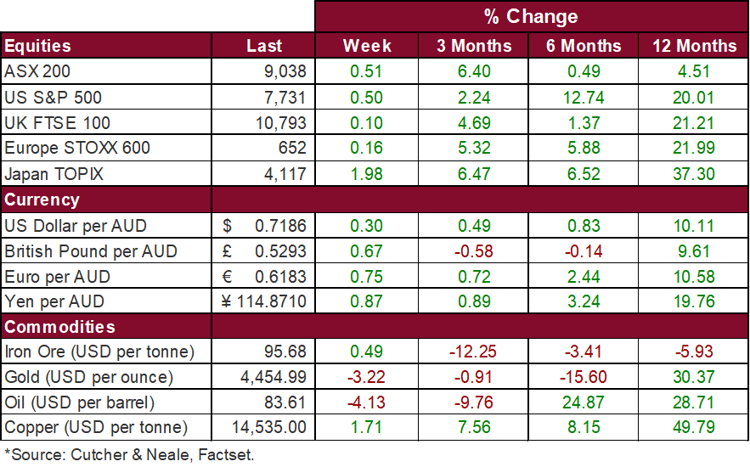
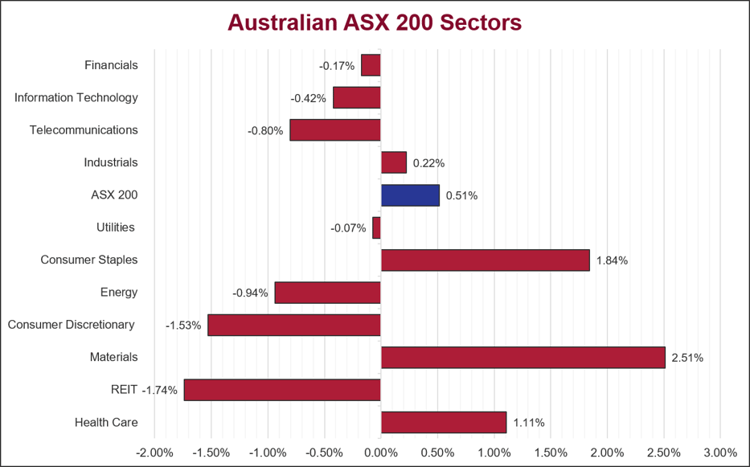
The Australian share market finished the week higher, with the ASX 200 gaining 0.5%, as a busy earnings season offset concerns around hotter-than-expected inflation and the prospect of further RBA rate rises. The Materials Sector (+2.5%) led the market, supported by stronger gold, copper and iron ore prices. PLS Group rose (+5.7%), while Capstone Copper added (+5.5%). The Consumer Staples Sector (+1.8%) also outperformed following positive earnings from Coles and Woolworths, while the Health Care Sector (+1.1%) benefited from strong results, including Ramsay Health Care. The REIT Sector (-1.7%) was the weakest performer as rising bond yields and disappointing guidance from PEXA weighed on sentiment. The Consumer Discretionary Sector (-1.5%) also declined amid rate concerns and mixed company results. Web Travel Group was the portfolio’s strongest performer, rising 8.2%, while Generation Development Group fell 16.0% following its earnings result.
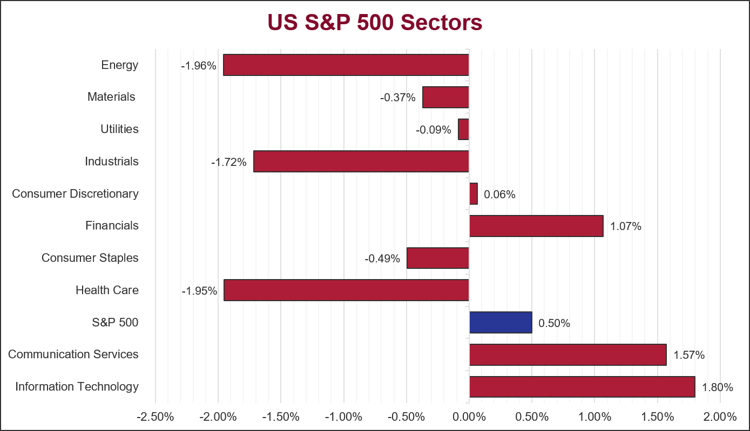
US share markets recorded modest gains over the week, with the Nasdaq rising 0.9% and both the S&P 500 and Dow Jones gaining 0.5%. Markets were supported by stronger-than-expected company earnings, particularly among software businesses (Microsoft +6.3%), which improved investor confidence in future demand. This helped Information Technology Sector (+1.8%) and Communication Services Sector (+1.6%) outperform. In contrast, Health Care Sector (-2.0%) and Energy Sector (-2.0%) were the weakest performers, with a 4.2% decline in oil prices weighing on energy companies. Market reactions to the US-Canada trade negotiations and newly introduced tariffs were relatively subdued, with little impact on overall investor sentiment. Strong results from NVIDIA supported markets, while cautious Federal Reserve comments led investors to review the outlook for interest rates.
European share markets finished slightly higher over the week, with the STOXX Europe 600 rising 0.2%. Improving economic data and stronger company earnings supported markets, with lending to European businesses recording its strongest growth in several years. However, persistent inflation in France and Spain, low regional gas reserves and rising bond yields added to expectations of a September interest rate rise. Travel & Leisure Sector (+2.5%) benefited from lower fuel costs, while Financial Services Sector (+2.4%) also advanced. On the other hand, Energy Sector (-3.1%) declined as oil prices eased following improved supply conditions, while French environmental services company Veolia Environnement fell 3.6%.
Stock & sector movements

What caught our eye
NVIDIA’s Cracking Result: Compute Is Revenue, But How is it Funded?
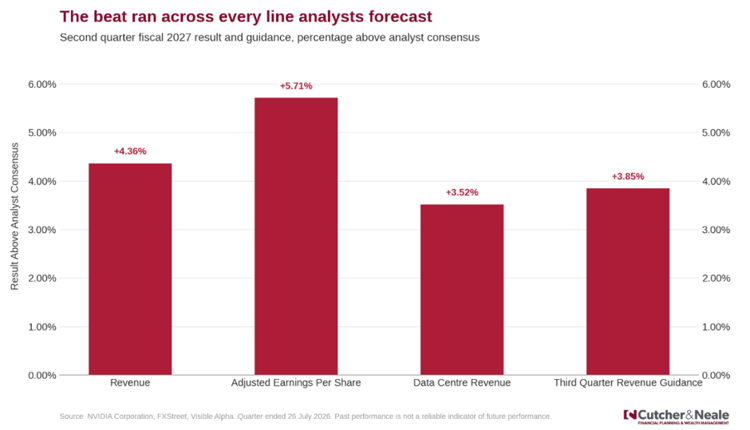
NVIDIA reported its 2Q 2026 results last week and beat expectations on every measure the market forecasts. The more interesting development lies beneath the headline numbers: how the world's most valuable company is helping to fuel demand for its own chips.
The results themselves were unequivocal. Revenue of US$96.2 billion came in well ahead of the roughly US$92 billion expected by analysts and was up 106% from a year ago. Data centre revenue reached US$89 billion. Adjusted earnings of US$2.22 per share beat the US$2.10 consensus, and guidance for the current quarter of US$108 billion topped forecasts by around US$4 billion. Chief executive Jensen Huang declared that AI has reached its inflection point and that compute is now revenue.
Yet the share price remained relatively subdued, as it has following prior strong results, finishing the week up 1.3%. This has become a familiar ritual, with the share price falling in anticipation of a missed result before rebounding after it doesn’t. At a valuation now above US$5 trillion, a solid beat result is no longer a reward for shareholders but the price of admission. The market has already assumed near-flawless execution, so its attention has shifted to a different question, namely how this enormous build-out is being paid for.
That is where the real news of the quarter sits. NVIDIA has signed agreements with six of the world's largest investment firms, including Apollo, BlackRock, Blackstone, Brookfield, Goldman Sachs and KKR, to mobilise more than US$500 billion in outside capital for AI data centres. In effect, it is asking lenders to treat computer chips as long-life infrastructure rather than fast-depreciating equipment. NVIDIA has pointed out that its older-generation products continue to earn solid rental income years after their release. The company has also guaranteed up to US$105 billion in leases for a single Ohio data centre campus and extended payment terms for large customers to as much as a year. That showed up in the accounts as a sharp rise in money owed to the company. Notably, free cash flow of US$21.3 billion was less than half the prior quarter, despite revenue growing 18%.
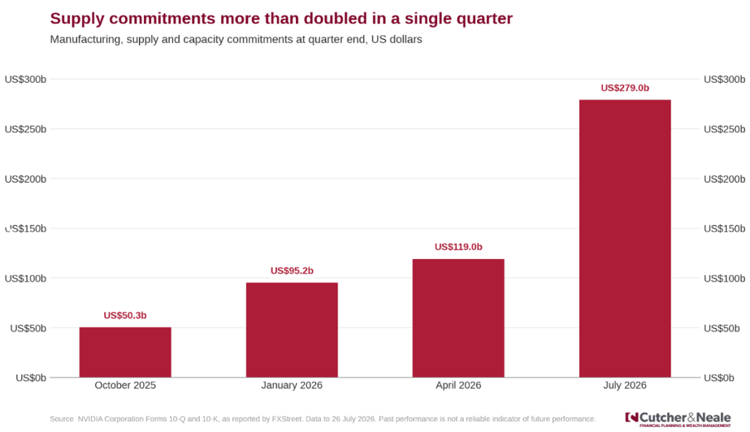
Our read is constructive but clear eyed. Until now, only a handful of technology giants have been able to buy AI chips at scale, leaving a good deal of genuine demand unmet. Bringing institutional capital into the market broadens access to smaller buyers, reduces concentration risk, and supports the revenue outlook for years. Financing in response to demand is a normal feature of every major infrastructure cycle. What deserves watching is the cash. When a vendor helps finance its own customers, reported revenue will outpace collected dollars, and the size of that gap will matter more moving forward.
For investors, this suggests the AI story has entered a phase where balance sheets matter. We remain positive on the durability of the build-out and continue to prefer holding this theme through select names, sized sensibly. We are watching cash conversion and the progress of these new financing methods closely, because they will tell us more about the health of this cycle than the next headline number.
The week ahead
Locally, the August corporate reporting season is largely winding down, with market focus shifting from company earnings to key economic data. On Wednesday, Australia’s second quarter GDP release will provide an important update on economic growth, consumer activity and business investment, with the result likely to influence expectations for future Reserve Bank policy decisions.
Overseas, Wednesday brings the US ADP employment report and the Reserve Bank of New Zealand’s interest rate decision, while Friday’s closely watched US Nonfarm Payrolls and average hourly earnings data will offer fresh insight into labour market strength, inflation pressures and the outlook for Federal Reserve interest rates.


Wade is the head of the Investment Services division at Cutcher & Neale and has over 15 years of industry experience in accounting and investment advisory roles.
Wade guides his division on the belief that investment portfolios should be built on transparency and flexibility. His expertise focuses on direct portfolio exposure to both Australian and Global Investment markets.
-1.png?width=352&name=Investment%20SnapShot%20Header%20-%20July%202025%20(1)-1.png)