-1.png)
Weekly recap
What happened in markets
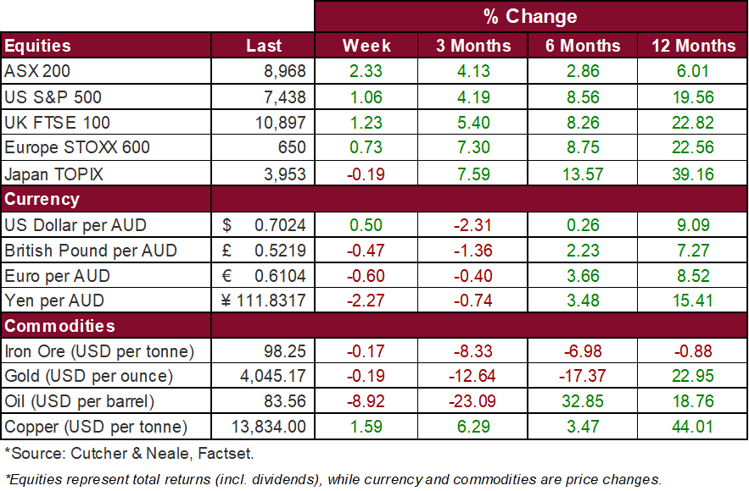
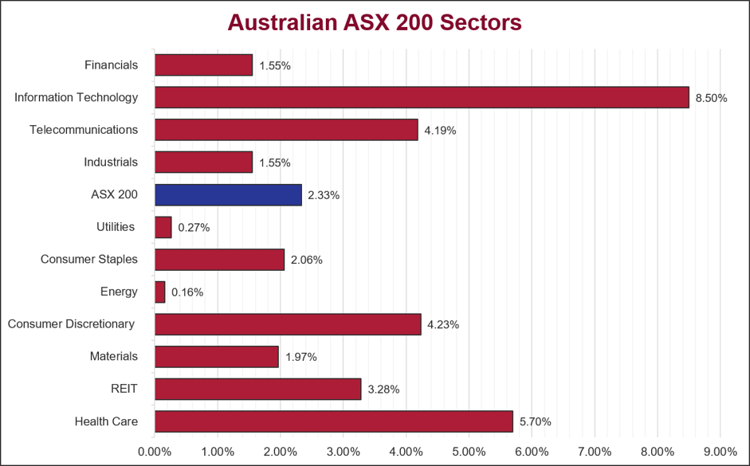
The Australian sharemarket posted a strong weekly gain, with the ASX 200 rising 2.3% despite some late-week volatility. Investor sentiment was supported by softer-than-expected inflation data, which reduced expectations of further RBA rate hikes. All sectors finished the week higher, led by the Information Technology (+8.5%) and Health Care (+5.7%) sectors, continuing its recent recovery. The Consumer Discretionary (+4.2%) and Telecommunications (+4.2%) sectors also outperformed as investors increased exposure to growth-oriented equities. Notable portfolio movers during the week included Web Travel Group (+33.1%), SEEK (+14.0%) and Life360 (+11.1%).
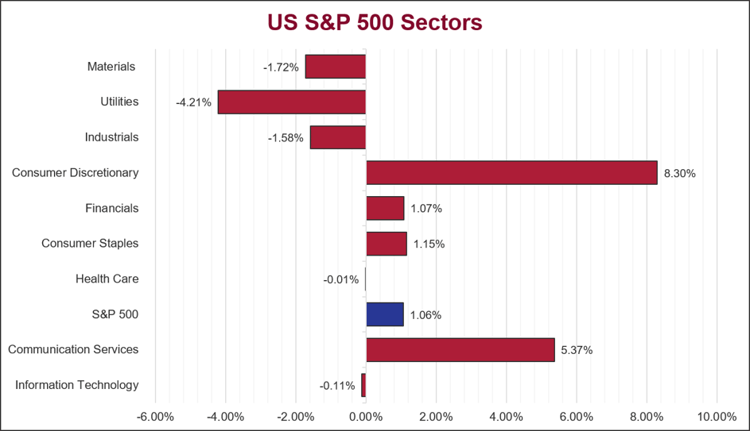
US sharemarkets delivered a positive return over the week, with the S&P 500 rising 1.1%, supported by easing inflation pressures, resilient corporate earnings and growing confidence that the Federal Reserve may be nearing the end of its tightening cycle. Performance was led by the Consumer Discretionary (+8.3%) sector, driven largely by Amazon (+17.0%). The Communication Services (+5.4%) sector also outperformed, while the Utilities (-4.2%) sector lagged as investors rotated towards higher-growth sectors. Among portfolio holdings, Microsoft (+21.8%) was a standout performer adding $450 billion to its market capitalisation in one day, while Expedia Group (+13.4%) also advanced.
European sharemarkets finished the week slightly stronger, with the STOXX Europe 600 up 0.7%. Eurozone GDP grew 0.4% sequentially in the second quarter, firmly above market expectations for a 0.2% expansion. AI-related investment and robust government spending helped offset the drag from the US-Iran conflict and higher energy costs. Performance was led by the Automobiles & Parts (+4.0%), Construction & Materials (+2.6%), Retail (+2.6%) and Financial Services (+2.1%) sectors, reflecting improving confidence in the economic outlook. In contrast, defensive sectors lagged, with the Utilities sector down by -2.9%. Veolia Environnement shares were among the steepest decliners (-5.8%), weighed down by a downgrade from Morgan Stanley analysts, despite solid first-half results.
Stock & sector movements

What caught our eye
The US earnings season remains strong beneath the headline
US companies are reporting their strongest profit growth in almost five years, and the headline numbers arriving each day look remarkable. That said, they deserve a closer look before taking them at face value.
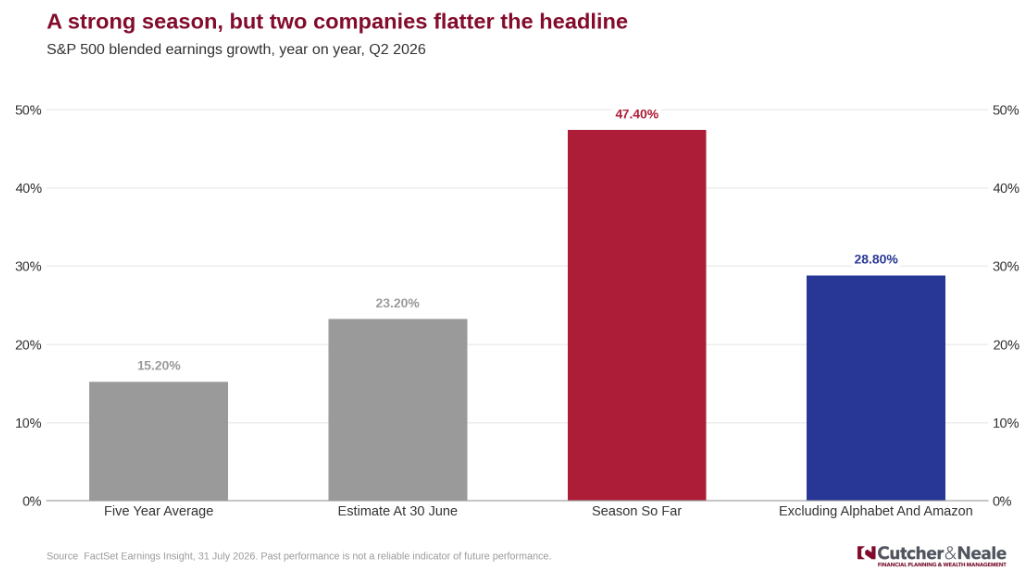
With around two thirds of S&P 500 companies now reporting Q2 2026 results, profits are running 47.4% above the same period last year. That would be the fastest growth since late 2021, when earnings were still rebounding against COVID-depressed comparisons. A striking 86% of companies have beaten analyst expectations, well ahead of the five-year average of 78%, and the average profit margin of 16.7% is the highest since FactSet began tracking the figure in 2009.
Much of that headline strength, however, traces to two companies. Alphabet, the parent company of Google, reported earnings per share of US$9.11 against expectations of US$2.88. Almost all of that surprise came from a US$98 billion accounting gain, mostly paper profits from revaluing investments Alphabet holds in other companies (notably SpaceX and Anthropic). It was not earned by selling more advertising or cloud computing, and without it the result was almost exactly in line with forecasts. Amazon has since done much the same, reporting US$5.75 per share against expectations of US$1.82, on the back of US$53 billion of other income driven largely by the rising value of its stake in Anthropic. Because both companies are so large, they boosted the measured earnings growth for the S&P 500 from 28.8% to 47.4%.
The good news is that the cleaner numbers remain genuinely impressive. Earnings growth of 28.8% would still mark a second consecutive quarter above 20% and a seventh consecutive quarter of double-digit growth. Revenue, which is less affected by accounting adjustments, is growing at 14.1%, the fastest in nearly five years and ten of the eleven sectors are earning more than they did a year ago.
Key company results so far
The banks set the early tone. JPMorgan grew revenue 12% to US$57 billion, comfortably ahead of forecasts, with investment banking fees and equities trading providing much of the upside. The bank lifted its full year guidance for net interest income to around US$105 billion while earning a 23% return on tangible equity. Goldman Sachs was stronger still, with earnings per share of US$20.98 nearly doubling from a year ago and beating forecasts by 45%, driven by equities trading revenue up 72%, equity underwriting up 130% and an advisory backlog the firm says is its largest in five years. Both results point to a capital markets cycle in full swing, supported by the financing and deal making that the artificial intelligence buildout requires.
Alphabet's underlying business had a solid quarter. Google Cloud revenue grew 82% and search advertising rose 17%, evidence that its heavy investment in artificial intelligence is producing real returns. The bill for that investment is rising too, with capital spending guidance for 2026 lifted to around US$200 billion, a significant further increase flagged for 2027 and a first ever quarter of negative free cash flow for the company.
The chipmakers told the same story from the supply side. Intel beat expectations by a wide margin as data centre revenue jumped 59%, gross margins recovered to 41.8% from 29.7% a year earlier and management described demand for computing power as unprecedented. Micron earned US$25.11 per share against expectations near US$21.00 as memory prices surged. Free cash flow approached US$30 billion, most of which management intends to return to shareholders through buybacks. Senior industry figures expect the memory shortage to persist beyond the end of the decade and both companies are lifting their capital spending plans again to meet it.
With around two thirds of the index now reported, the momentum has held, and a further 136 companies are due to report this week. Our Investment Committee will continue to monitor the season closely over the coming weeks for any change in the strong momentum seen to date.
The week ahead
Locally, investor focus will shift their attention to the commencement of the Australian reporting season, with company earnings results taking centre stage. Markets will be closely assessing profit margins, earnings resilience and management outlooks for insight into how businesses are navigating a moderating inflation backdrop and evolving economic conditions.
Internationally, attention will turn to the US ISM Manufacturing PMI on Tuesday, a closely watched gauge of manufacturing activity and broader economic momentum. The headline event of the week, however, will be Friday's release of US Non-Farm Payrolls and unemployment data. These figures are expected to play a key role in shaping market expectations for the Federal Reserve's next policy moves and the trajectory of US interest rates.


Wade is the head of the Investment Services division at Cutcher & Neale and has over 15 years of industry experience in accounting and investment advisory roles.
Wade guides his division on the belief that investment portfolios should be built on transparency and flexibility. His expertise focuses on direct portfolio exposure to both Australian and Global Investment markets.
-1.png?width=352&name=Investment%20SnapShot%20Header%20-%20July%202025%20(1)-1.png)