

Weekly recap
What happened in markets
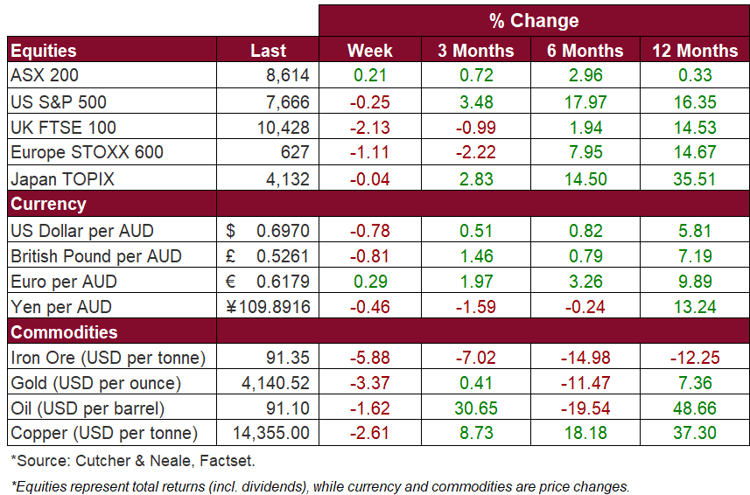
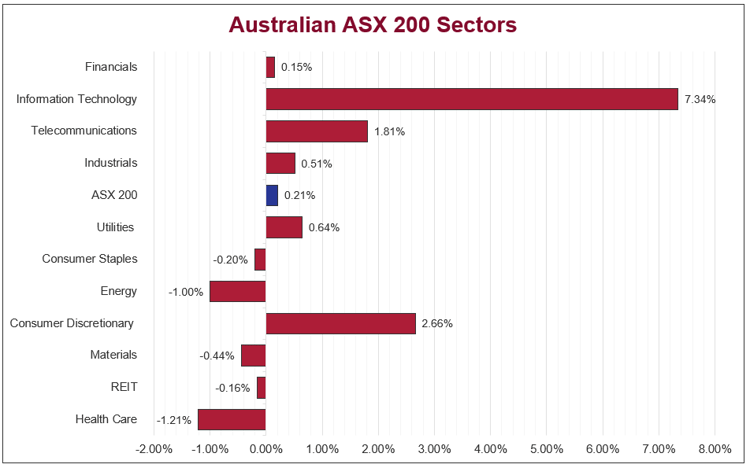
The Australian sharemarket finished the week modestly higher, with the ASX 200 gaining 0.2%. Markets were driven by a combination of the RBA's widely expected 0.25% rate increase and softer-than-expected inflation data, which reduced expectations for further near-term tightening. The Information Technology sector (+7.3%) was the standout performer, supported by strength across technology stocks, while the Consumer Discretionary sector (+2.7%) and Telecommunications sector (+1.8%) also posted solid gains. Although markets experienced a broad risk-off sell-off on Thursday, sentiment improved into week-end. In contrast, the Health Care (-1.2%), Energy (-1.0%) and Materials sectors (-0.4%) underperformed.
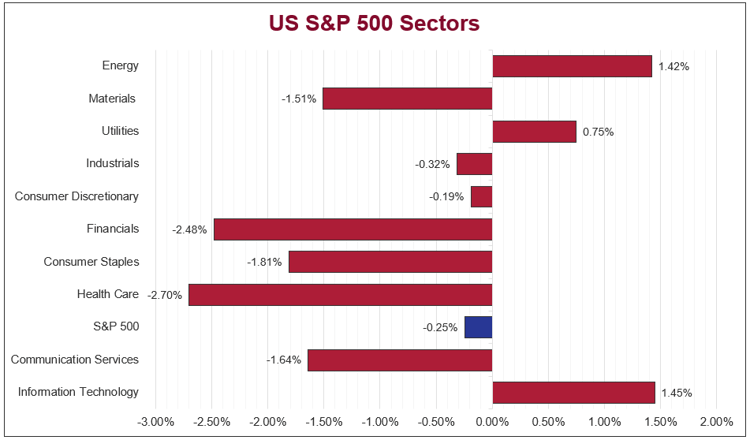
US sharemarkets were mixed over the week, with the NASDAQ gaining 0.5%, while the S&P 500 fell 0.2%, as strength in technology stocks offset weakness across other sectors. Softer-than-expected payroll and inflation data reduced expectations for a near-term Federal Reserve rate hike. The Information Technology (+1.4%) and Energy sectors (+1.4%) outperformed, with technology stocks benefitting from ongoing enthusiasm surrounding artificial intelligence and semiconductor demand. In contrast, the Health Care (-2.7%), Financials (-2.5%) and Consumer Staples sectors (-1.8%) lagged. Reflecting continued AI-driven demand, NVIDIA (+3.9%) advanced after announcing a US$150 billion share buyback.
European sharemarkets declined over the week, with the STOXX Europe 600 falling 1.1%. The Technology (+5.3%), Travel & Leisure (+0.5%) and Utilities sectors (+0.5%) were among the strongest performers, supported by ongoing enthusiasm surrounding artificial intelligence and continued investment in data centre infrastructure. In contrast, the Banks (-4.8%), Automobile & Parts (-3.5%) and Health Care sectors (-2.9%) lagged amid rising global bond yields and concerns surrounding sovereign debt markets in Europe. Elevated energy prices and uncertainty around central bank policy continued to weigh on broader market sentiment throughout the week.
Stock & sector movements

What caught our eye
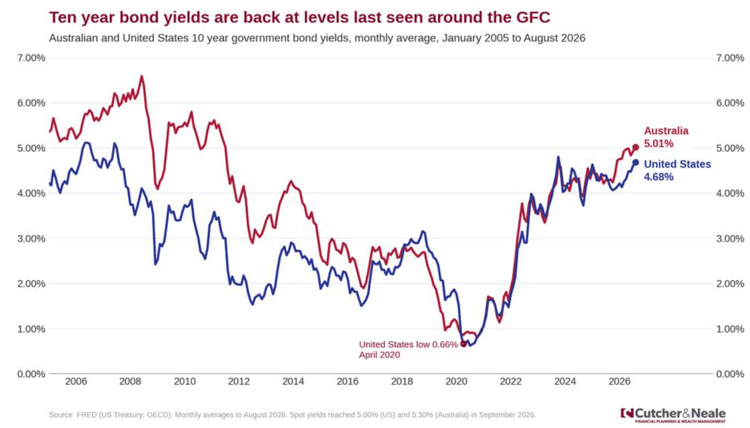
The yield on 10-year US government bonds rose above 5.2% last month, its highest level since 2007, and the Australian 10-year yield has pushed above 5.3% for the first time since 2011. After more than a decade of bonds paying very little, the income on offer from some of the safest assets in the world has changed materially.
We see this as an opportunity rather than a code red, but it helps to understand what has driven it. Inflation remains above target across most developed economies. The US Federal Reserve lifted rates by 0.25% to 3.75%-4.00% in September, with most of its committee members expecting another move before year end. The Reserve Bank has taken the cash rate to 4.60% and also flagged it may go again. Behind all of this sits oil. Renewed conflict between the US and Iran has disrupted energy flows through the Strait of Hormuz and pushed crude above US$100 a barrel. Higher energy costs feed directly into inflation. Markets have concluded that central banks cannot ease while that pressure persists. Theoretically, the oil supply shock could resolve quickly, which is a case for why interest rates may not stay higher for longer.
Alternatively, one reason they could stay elevated is government debt. Elevated across the globe, but particularly high in the US, where its debt obligations passed US$40 trillion in August. When the 10-year Treasury last sat at around 5% in 2007, the debt burden relative to the size of the economy was a fraction of what it is today. Every step higher in yields adds to the government's interest bill and at some point the arithmetic becomes difficult. The market will likely keep asking to be paid for that uncertainty.
The adjustment to higher interest rates has been painful for holders of long-dated bonds. The US 10-year has delivered an average real return of minus 7% a year since mid-2020, with drawdowns more typical of shares. Shorter dated bonds have fared far better. Their prices are much less sensitive to rising yields and they roll into higher rates more quickly (assuming rates go higher not lower). Our preference for shorter maturity bonds in our Fixed Income Model has served clients well, albeit some downward pressure on the prices of all bonds has been felt.
Looking forward, the starting yield is the most reliable guide to future bond returns, and starting yields are now attractive. A 10-year US government bond of 5.2% with inflation averaging 2.5% implies a real return of roughly 2.7% a year. Highly rated Australian Dollar corporate bonds are paying upwards of 6.5%. Market commentators suggest that at current relative pricing, bonds could match US equity returns over the coming decade, a striking result given shares have beaten bonds by around 14.5% a year over the past ten years. There’s a lot of assumptions going into that though, we’d caution. For example, the upside potential of technology, including artificial intelligence, has boosted equity returns and challenged what many previously thought. Additionally, it assumes inflation is contained. If not, historically equities are a much better inflation hedge than bonds.
For investors, this means defensive assets are once again earning their keep. Shorter maturities have protected capital while yields rose and now enjoy much higher coupon income. Investors are now watching for the point at which extending into longer bonds makes sense, because locking in 5% or better for several years is compelling if inflation is contained.
The week ahead
In Australia, the focus will be on the Westpac Consumer Confidence survey and inflation data, which may provide insight into how households are responding to higher interest rates and cost-of-living pressures. In the US, investors will be watching the Federal Reserve meeting minutes and labour market data, including jobless claims and private payrolls, for further clues on the outlook for interest rates and economic growth.


Wade is the head of the Investment Services division at Cutcher & Neale and has over 15 years of industry experience in accounting and investment advisory roles.
Wade guides his division on the belief that investment portfolios should be built on transparency and flexibility. His expertise focuses on direct portfolio exposure to both Australian and Global Investment markets.


-1.png?width=352&name=Investment%20SnapShot%20Header%20-%20July%202025%20(1)-1.png)