Weekly recap
What happened in markets
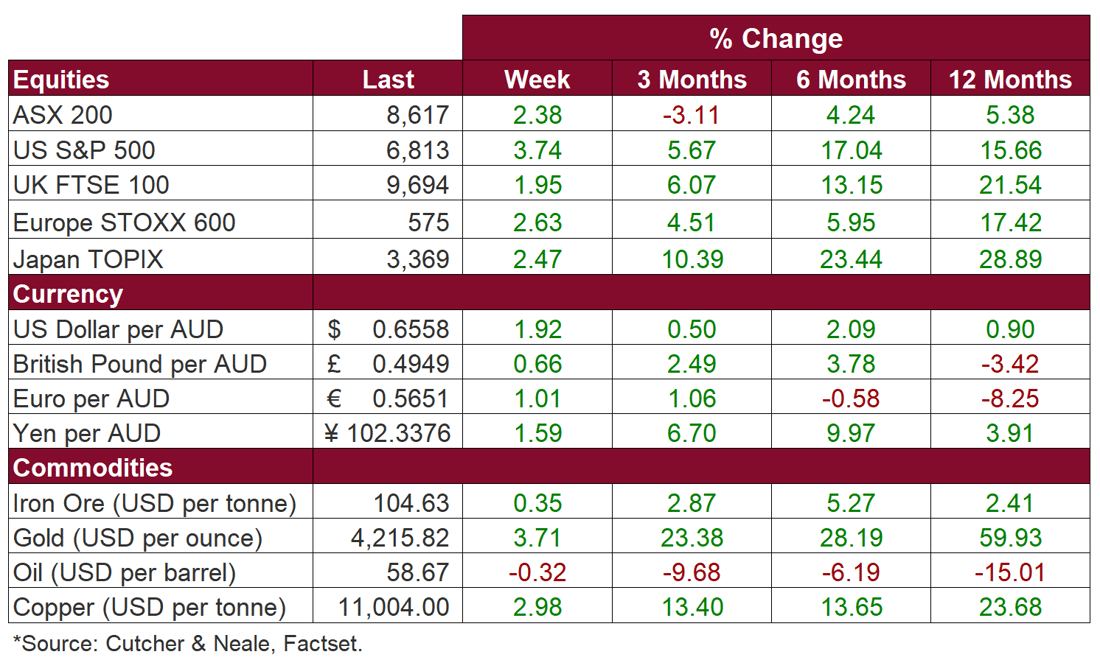
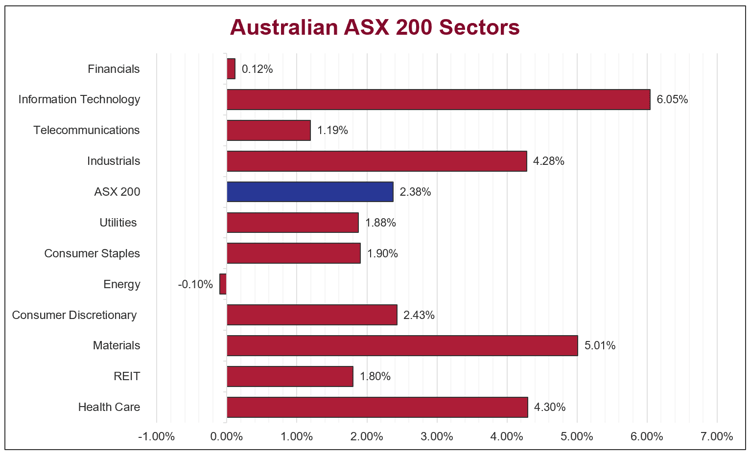
The Australian sharemarket advanced 2.4% last week, which ended a four-week streak of losses. Markets were buoyed by stronger US leads, as dovish Federal Reserve commentary helped lift local equities. Domestically, the latest CPI release showed annual inflation rose to 3.8%, which came in above market expectations of 3.6%. Housing was the biggest driver of consumer inflation, rising 5.9% due to higher electricity, rent and new dwelling costs. Electricity prices jumped 37.1% in October after households exhausted their government bill rebates. The Materials sector (+5.0%) found support from firmer commodity prices, while the Information Technology sector (+6.1%) outperformed.
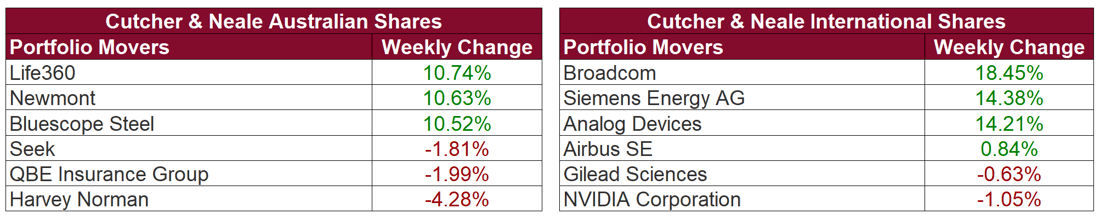
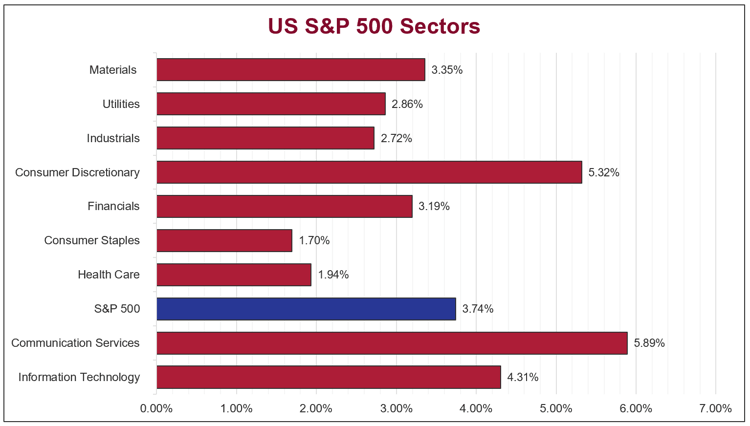
US sharemarkets extended their late-November rebound, as the S&P 500 gained 3.7%, boosted by rising expectations of a December Federal Reserve rate cut. Strong performances from Artificial Intelligence (AI) linked names and a series of positive retail earnings results aided the strong market performance. Improved US-China trade headlines also helped sentiment. However, several headwinds persisted, including competition concerns regarding major AI players like NVIDIA and Google. Economic worries remained in focus as consumer confidence weakened, affordability issues worsened, and key manufacturing data disappointed. All of the industry sectors finished the week in positive territory; Communication Services jumped 5.9% and Information Technology rose 4.3%.
European sharemarkets also rebounded strongly, as the Euro STOXX 600 added 2.6%. Improved geopolitical sentiment, and increased expectations of a December US Federal Reserve rate cut aided markets. The UK Budget delivered a larger-than-expected fiscal buffer funded by tax rises, reinforcing market expectations of a near-certain December Bank of England cut, though long-term growth concerns persisted. ECB commentary suggested policy is likely on hold as inflation continues to moderate, while upcoming eurozone readings are expected to remain near the 2% target. Sector performance was positive, as the Basic Resources, Construction, Banks, and Information Technology led the gains.
Stock & sector movements
What caught our eye
GLP-1 Divergence: Eli Lilly and Novo Nordisk
Over the past few years, we have watched with interest as the newfound GLP-1 obesity and diabetes drug market surged into mainstream health care. Two names, Novo Nordisk and Eli Lilly, have dominated these new markets. While Novo Nordisk was the pioneer, Eli Lilly has more recently taken the clear lead and shown us perhaps one of the most visceral examples of a pairs trade we’ve seen.
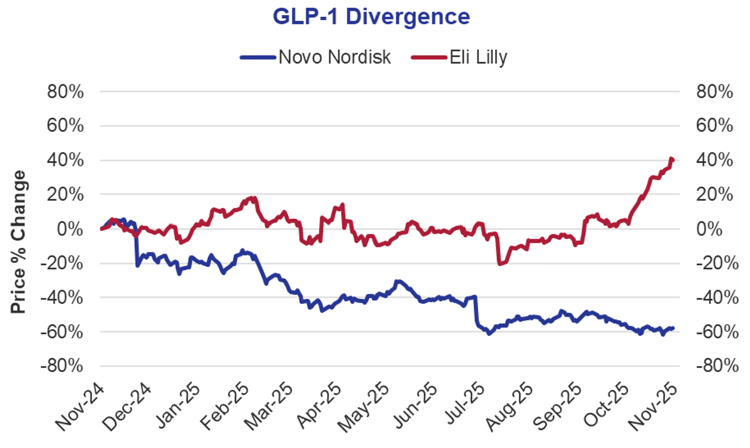
Eli Lilly has climbed 40.1% over the past year and recently became the 10th company in the world to reach a US$1 trillion market cap! It is the first pharmaceutical company to have achieved this, joining a club mostly reserved for big tech names like NVIDIA, Microsoft, Apple, Amazon, Tesla and Meta. Meanwhile, Novo Nordisk has sunk 57.6% and was dethroned as the most valuable listed company in Europe (now sitting at around number 8).
So, what happened?
Novo Nordisk
Despite developing breakthrough treatments, Novo has faced a string of commercial missteps. Early supply shortages of Wegovy opened the door for compounded (generic-like) alternatives. These cut into revenue and allowed Eli Lilly to catch up.
Novo also ran into challenges with regulatory filings, withdrew from key M&A opportunities (like the bid for Metsera), and stumbled with disappointing clinical trial results. Notably, last week we learned its drug failed to slow Alzheimer’s disease progression in two late-stage clinical trials.
Internally, leadership changes and restructuring reflected a company scrambling to regain footing.
Eli Lilly
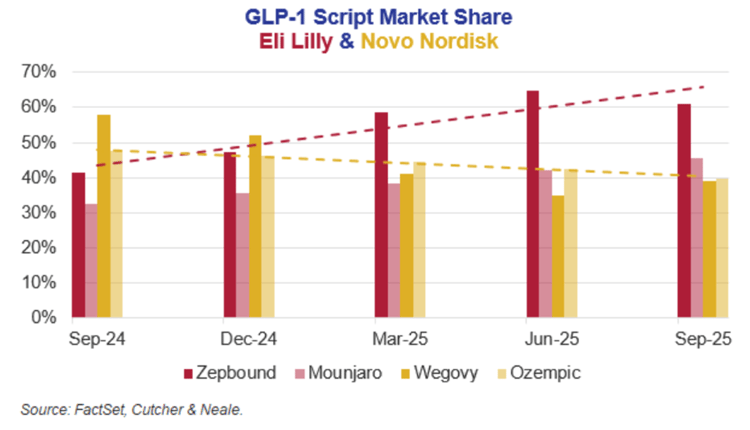
In contrast, Eli Lilly has hit milestone after milestone. Its GLP-1 drugs Zepbound and Mounjaro have not only matched Ozempic and Wegovy in efficacy, but they’ve also now surpassed them in script market share.
Eli Lilly avoided major supply disruptions and expanded access through retail partnerships and direct-to-consumer models. Its pill-form GLP-1, Orforglipron, has generated strong data, positioning it to lead the next wave of GLP-1 delivery innovation.
Moreover, Eli Lilly was first to strike a high-profile pricing agreement with the US government, allowing Medicare coverage for obesity treatment while lowering monthly costs. This agreement may weigh on margins in the short term, but it opens access to over 12 million new patients and addressed regulatory overhang, which was front of mind for investors.
Cutcher’s Perspective
Eli Lilly has been a core holding in the Cutcher & Neale International Shares Model since 2023. It has been our preferred way to get exposure to the health care sector and the new GLP-1 market.
Our preference for Eli Lilly came down to the company being a more mature, diversified and reliable operator. Eli Lilly’s outlook is not solely determined by the success of GLP-1s, it successfully operates across oncology, immunology and neuroscience as well.
While Novo Nordisk was the first mover in GLP-1s, it is a more specialised and less experienced company (when compared to Eli Lilly). That comes with increased risk when you’re pioneering a new technology at global scale. Additionally, it became clear early on that excess demand for GLP-1 drugs wasn’t going away and that supply side execution was becoming increasingly important.
The week ahead
Locally, all eyes will be on the Gross Domestic Product result for the September quarter. Quarterly growth of 0.7% is expected.
Overseas, the Unemployment Rate, Retail Sales and Gross Domestic Product will be released in Europe, while Nationwide Housing Prices will be announced in the UK.


Wade is the head of the Investment Services division at Cutcher & Neale and has over 15 years of industry experience in accounting and investment advisory roles.
Wade guides his division on the belief that investment portfolios should be built on transparency and flexibility. His expertise focuses on direct portfolio exposure to both Australian and Global Investment markets.
-1.png?width=352&name=Investment%20SnapShot%20Header%20-%20July%202025%20(1)-1.png)