

Weekly recap
What happened in markets
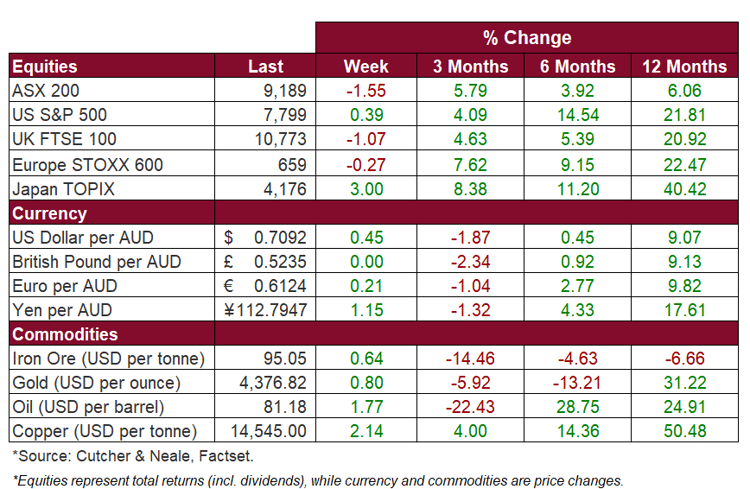
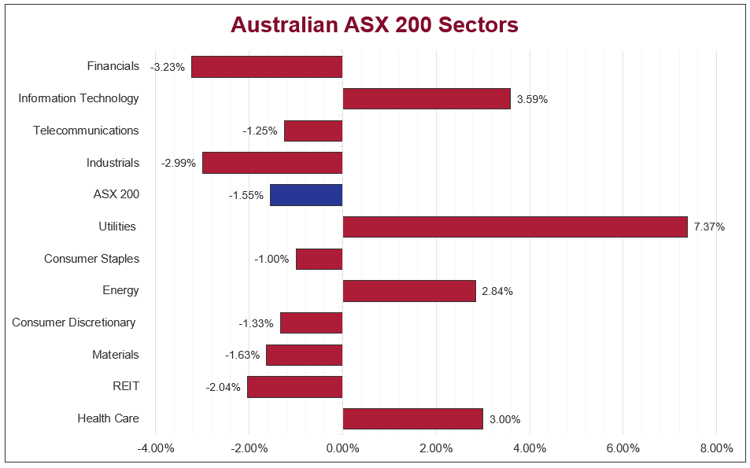
The Australian sharemarket finished the week lower, with the ASX 200 declining 1.6% as investors navigated a busy earnings season and ongoing uncertainty surrounding the interest rate outlook following the RBA’s decision to leave rates unchanged. Weakness in the Financials sector (-3.2%), following a series of bank earnings updates, and the Materials sector (-1.6%), amid softer sentiment towards miners and commodity prices, weighed on the market. In contrast, the Utilities sector (+7.4%) was the strongest performer, supported by earnings-driven gains from AGL and Origin Energy, while the Information Technology sector (+3.6%) advanced on strength in software and data centre-related names. The Health Care sector (+3.0%) also outperformed, led by a continued recovery in ResMed.
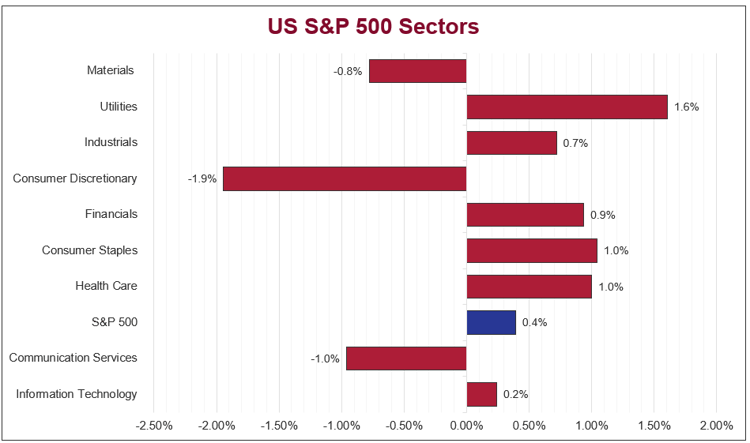
US sharemarkets finished the week modestly higher, with the S&P 500 gaining 0.4% as easing concerns around further Federal Reserve rate hikes supported investor sentiment. The Energy sector (+7.3%) was the standout performer, benefitting from a sharp rise in oil prices amid ongoing uncertainty surrounding the Strait of Hormuz and the US-Iran conflict. The Utilities sector (+1.6%) and Health Care sector (+1.0%) also advanced as investors favoured more defensive areas of the market. In contrast, the Consumer Discretionary sector (-1.9%) lagged following weakness across retail and consumer-facing stocks, while the Communication Services sector (-1.0%) was weighed down by softer performance from selected media and growth-oriented companies.
European sharemarkets finished the week lower, with the STOXX Europe 600 declining 0.3% as investors weighed up signs of slowing economic momentum despite stronger-than-expected second-quarter growth and a robust earnings season. The Energy sector (+3.4%) was the strongest performer, supported by higher oil prices and ongoing concerns surrounding disruptions to shipping through the Strait of Hormuz. The Telecommunications sector (+1.4%) and Technology sector (+1.1%) also advanced, benefitting from resilient earnings results and continued demand linked to AI and data-centre investment. In contrast, the Health Care sector (-2.5%) lagged amid a rotation towards more cyclical sectors, while the Basic Resources sector (-2.4%) weakened as metals prices softened and investors took profits following recent gains.
Stock & sector movements

What caught our eye
SpaceX Grew Fast. The Spending Grew Faster.
SpaceX delivered its first full set of results as a publicly listed company recently and the numbers landed well with the market. What sits beneath the revenue line is the part worth understanding for all investors.
The headline figures were strong by any measure. Revenue reached US$7.8 billion for the June quarter, ahead of the US$6.8 billion analysts had pencilled-in and 92% higher than a year earlier. Every division beat expectations. Connectivity revenue, which is the Starlink satellite internet business, grew 66% to US$4.3 billion, with the number of subscribers now 12 million (+101.2% year-on-year). The artificial intelligence (AI) division, built largely around renting out computing capacity to others, grew revenue 247% to US$2.6 billion. Gross margin improved to 55.3% from 43.9% a year ago and the company closed the quarter with a backlog of orders worth US$47.5 billion.
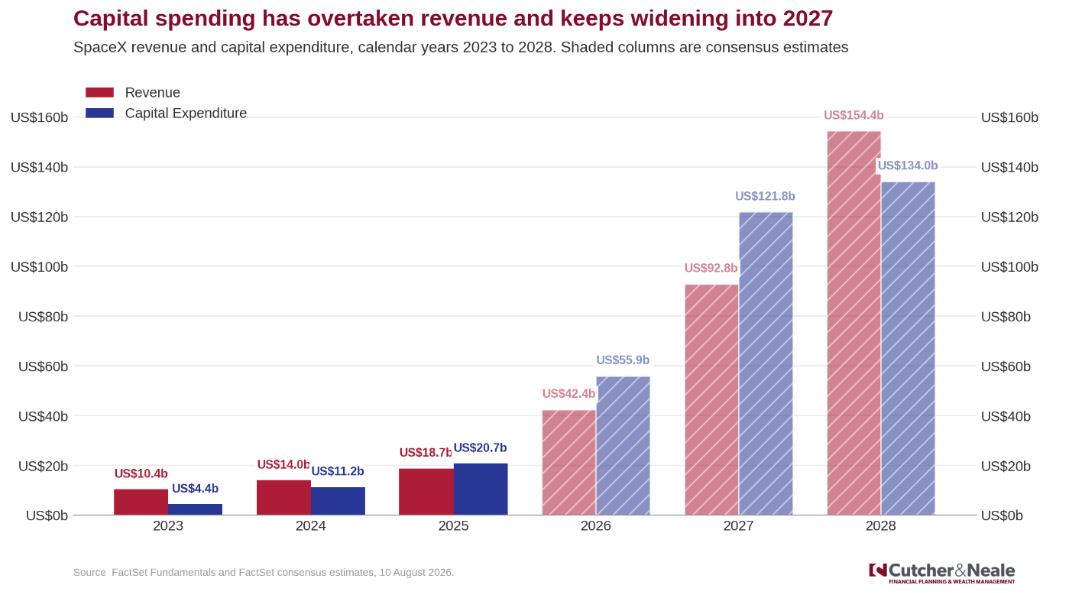
Caution from some shareholders came from the spending. SpaceX invested US$18 billion during the quarter, well above the US$13 billion the market had expected and more than twice what it earned in revenue. Almost US$16 billion of that went into AI infrastructure alone. CEO Elon Musk guided for similar levels of investment for the next two quarters, leading to expectations that capital spending could reach over US$100 billion per annum by 2027.
The second thing that caught our eye was the decision on chips. Management confirmed on the earnings call that SpaceX will now build exclusively on NVIDIA hardware, describing its Vera Rubin architecture as the best available and pointing to an understanding that SpaceX will receive a very significant share of NVIDIA's output next year. That is a shift in strategy. The company had been working towards designing its own chips alongside Tesla, an effort that includes the vast Terafab chip plant confirmed for Texas just two days after the result. Committing to NVIDIA removes a great deal of engineering risk and brings capacity online sooner. It also makes them dependent on a single supplier and it weakens the argument that SpaceX can build a lasting advantage over competitors buying exactly the same equipment. The caveat being that this move could be mainly driven by timing, given Musk is seeking to capitalise on the high price of compute right now and the Terafab chip plant won’t be in production for some time.
For most investors, the useful signal is what the spending says about the AI story, which is supporting the broader market. The billions directed to AI infrastructure goes to chipmakers, power suppliers, builders and equipment manufacturers. The exclusive commitment to NVIDIA hardware was interesting and supports the rhetoric, given the company’s reputation as the AI poster child. Clients hold this theme across a range of holdings rather than in one name, which is why the durability of the spending matters more to portfolios than the fortunes of any single company. From that perspective, whether you own shares in SpaceX or not, this result was certainly noteworthy.
The week ahead
Locally, attention will be on the Australian reporting season, with BHP, CSL, Pro Medicus and Cochlear due Tuesday, while July labour force figures on Thursday will provide an update on employment conditions. Overseas, investors will watch US Federal Reserve meeting minutes and PMI data for clues on interest rates and economic momentum.


Wade is the head of the Investment Services division at Cutcher & Neale and has over 15 years of industry experience in accounting and investment advisory roles.
Wade guides his division on the belief that investment portfolios should be built on transparency and flexibility. His expertise focuses on direct portfolio exposure to both Australian and Global Investment markets.

-1.png?width=352&name=Investment%20SnapShot%20Header%20-%20July%202025%20(1)-1.png)