
-1.png)
Weekly recap
What happened in markets
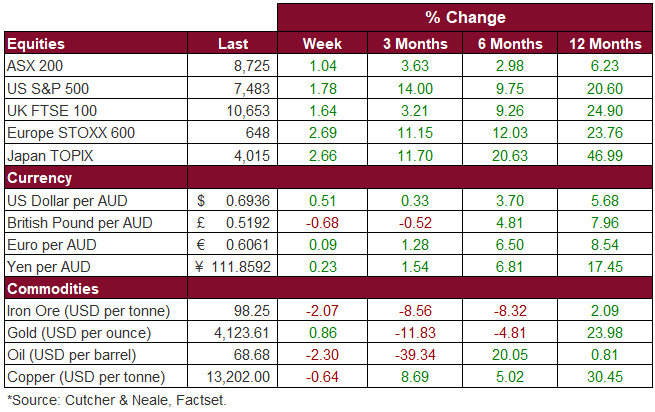
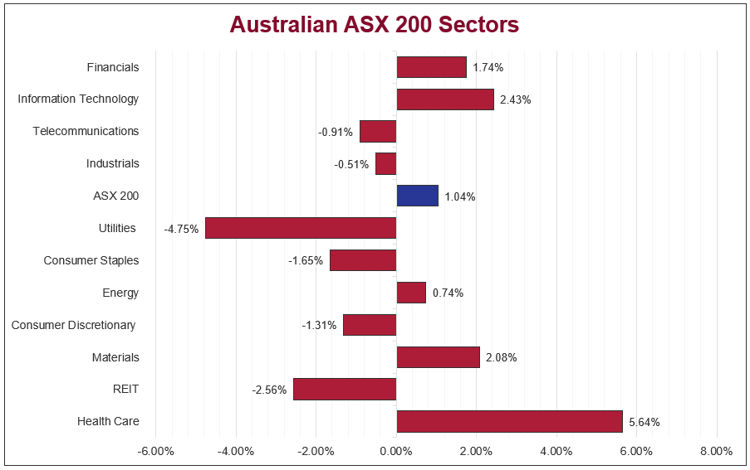
The Australian sharemarket finished the week higher, with the ASX 200 up 1.04% as a rebound in the Healthcare sector (5.64%) from a nine-year low earlier in June and stronger gold prices helped support the benchmark. Information Technology (2.43%) and Financials (1.74%) also contributed to the gains, with both sectors benefitting from softer-than-expected US employment data, which drove a late-week rally across the index. Generation Development Group Limited (20.47%) and Life360 (16.70%) were notable contributors. Capital rotated away from defensive, yield-heavy sectors, with Utilities (-4.75%) weighing on the benchmark, led by Origin Energy (-5.47%) amid exposure to broader global energy fluctuations. REITs (-2.56%), Consumer Staples (-1.65%) and Consumer Discretionary (-1.31%) were also caught in the rotation, while Webjet fell 4.70% after missing profit expectations.
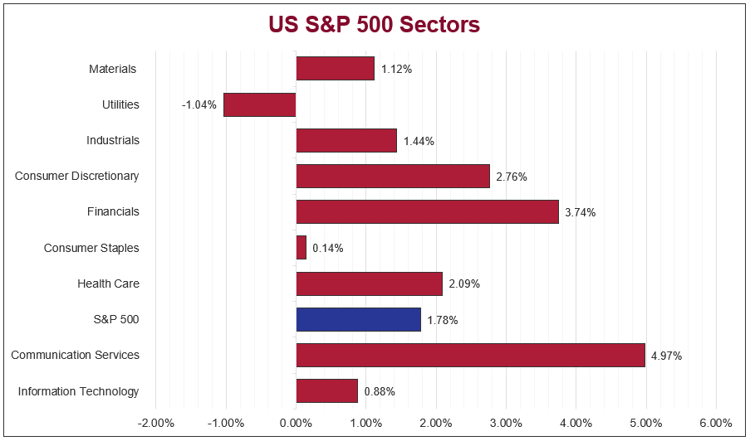
US sharemarkets extended their gains for another week, supported by weaker-than-expected employment data on Thursday that triggered a late-week rally. The U.S. economy added just 57,000 jobs in June, well below expectations and prompting a slight shift in tone from new Federal Reserve Chairman Kevin Warsh. The S&P 500 finished 1.78% higher for the week, with only the Utilities (-1.04%) and Energy (-0.95%) sectors ending lower as Middle East tensions eased and sector rotation continued. Gains were led by the Communication Services (4.97%), Financials (3.74%), Consumer Discretionary (2.76%) and Health Care (2.09%) sectors. Visa (7.70%) had a strong week, supported by its push into AI-driven transactions, while Moderna (18.57%) rallied after investors responded positively to the long-term strategy outlined at its Annual Science Day.
European sharemarkets finished the week strongly, with the STOXX Europe 600 gaining 2.69% to reach a record high on Friday. More than 72% of stocks in the benchmark ended in positive territory, led by Financial Services (4.62%), Healthcare (4.36%), Energy (3.18%) and Automobiles (3.02%) sectors. Deutsche Bank helped propel the benchmark higher, rising 7.42% after a major analyst upgrade from Morgan Stanley, which cited unprecedented revenue momentum. Siemens also gained 5.57%, reaching all-time highs following analyst upgrades that reflected confidence in the company’s continued strength in automation and industrial software. However, the Telecommunications (-3.36%) and Travel (-0.44%) sectors detracted from the benchmark over the week.
Stock & sector movements

What caught our eye
The US Jobless Rate Fell but the Workforce Shrank
The June US jobs report arrived last week showing slower hiring alongside a lower unemployment rate. The two findings sit oddly together and understanding it helps contextualise the interest rate outlook.
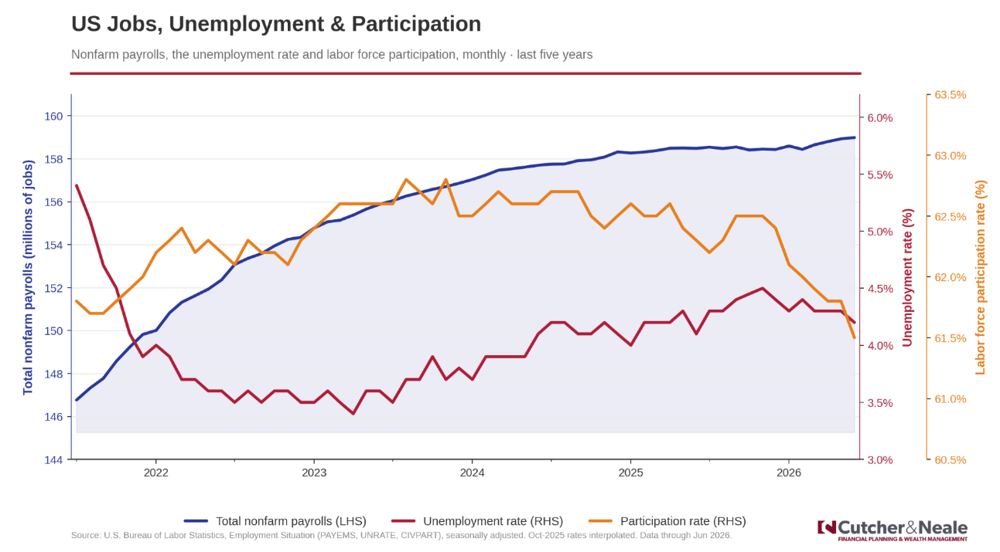
US employers added 57,000 jobs in June, below the roughly 114,000 the market expected and the softest month since February. The prior two months were revised down by a combined 74,000. At the same time, the unemployment rate eased from 4.3% to 4.2%. A lower jobless rate would normally be read as a sign of strength. In this case, the detail suggests a more modest interpretation.
The rate fell because around 720,000 people left the labour force during the month. Participation dropped to 61.5%, its lowest level in more than five years, and the workforce has declined by roughly 2.2 million people since its peak last November. Retiring baby boomers and tighter immigration policy both appear to be reducing the supply of workers. When fewer people are counted as looking for work, the unemployment rate can fall even while hiring cools. Several economists believe part of June's decline was a quirk in the data that may reverse in coming months. Even so, the longer trend of a flat or shrinking workforce is well established and worth monitoring.
For the Federal Reserve, the report resolved little. Softer hiring gives the central bank room to leave rates unchanged at its July meeting and likely in September as well. Beyond that, economists are divided. Some argue a smaller workforce will keep unemployment low and gradually build a case for higher rates. Others expect slower job growth to revive the case for cuts. New Fed chair Kevin Warsh has indicated that inflation remains the priority, and with annual wage growth of 3.5% roughly keeping pace with prices, the labour data alone is unlikely to decide policy. The June inflation report due in two weeks carries more weight.
For investors, this suggests patience rather than repositioning. Markets have scaled back expectations of a near term rate move. A hold this month appears the most likely outcome. Nothing in this report signals the kind of deterioration that should concern long term investors, though it does caution against building a portfolio around an assumption of rapid rate cuts.
The week ahead
Locally, attention will be on May building permits and house approvals, with limited domestic economic data scheduled for release throughout the week.
Overseas, the focus will shift to US economic data, including Balance of Trade figures on Tuesday and Jobless Claims on Thursday. Across the Atlantic, European markets will be watching Retail Sales and PPI data.


Wade is the head of the Investment Services division at Cutcher & Neale and has over 15 years of industry experience in accounting and investment advisory roles.
Wade guides his division on the belief that investment portfolios should be built on transparency and flexibility. His expertise focuses on direct portfolio exposure to both Australian and Global Investment markets.
-1.png?width=352&name=Investment%20SnapShot%20Header%20-%20July%202025%20(1)-1.png)