
.png)
|
|
Quick TakeGlobal markets turned sharply lower in March as geopolitics displaced the more constructive tone seen earlier in the year: The escalation of conflict in the Middle East, and the resulting disruption to global energy supply, drove a sharp rise in oil prices and reignited concerns around inflation, interest rates and growth. US equities fell across the board, with the S&P 500 down 4.98%, the Nasdaq down 4.68%, and the Russell 2000 down 5.00%. Europe also weakened materially, with the STOXX Europe 600 falling 7.56%, while Australia’s ASX 200 declined 7.15%, its weakest month since mid-2022. In the US, the key theme was the market impact of the Iran conflict and the associated energy shock: The near closure of the Strait of Hormuz pushed oil prices sharply higher, lifted bond yields, and reduced expectations for near-term rate cuts. The Federal Reserve left rates unchanged at 3.50% to 3.75% and signalled a more cautious stance on easing, while softer economic data pointed to a more stagflationary backdrop. Even so, markets showed some resilience at times, supported by corporate buybacks and still solid earnings expectations. In Europe and Australia, higher energy costs and tighter policy settings weighed heavily on sentiment: Europe was particularly exposed given its reliance on imported energy, with rising oil and gas prices driving weaker confidence, slower activity and higher inflation expectations. In Australia, the RBA lifted the cash rate by 0.25% to 4.10%, while the ASX 200 fell 7.15% and the Australian Dollar weakened to US$0.6849. Overall, March marked a clear shift in market conditions, with investors increasingly focused on inflation, policy restraint and the risk to global growth. |
|
Snapshot
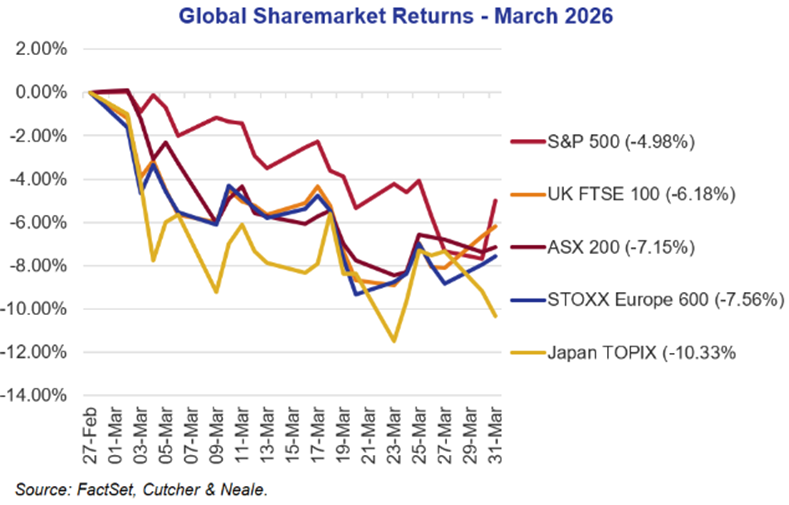
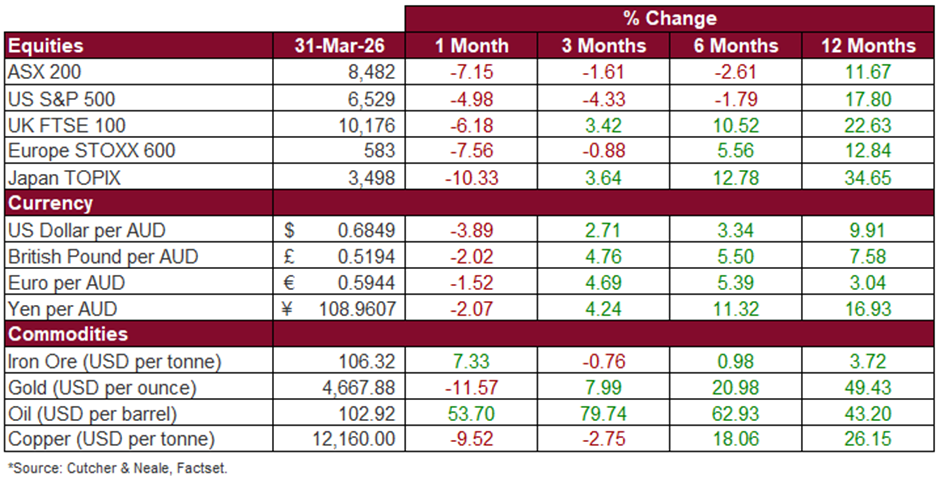 Global equity markets experienced a sharp reversal in March, as a significant geopolitical shock disrupted the relatively constructive backdrop seen earlier in the year. In the US, the S&P 500 declined 4.98% and the Nasdaq fell 4.68%. The Russell 2000 also weakened, falling 5.00%. European markets moved similarly lower, with the STOXX Europe 600 down 7.56%, while the FTSE 100 declined 6.18%, the DAX fell 10.30%, and the CAC dropped 8.81%. In Australia, the ASX 200 declined 7.15%, marking its weakest monthly performance since mid-2022. The primary driver of market weakness was the escalation of conflict in the Middle East, which led to a sharp rise in oil prices and renewed concerns around inflation, interest rates and global growth.
In the US, markets were dominated by the fallout from the Iran conflict and the associated energy shock. The near closure of the Strait of Hormuz disrupted a meaningful portion of global oil supply, pushing oil prices sharply higher and driving inflation expectations upward. This saw bond yields rise notably, with the 10-Year yield reaching its highest level since mid-2025. The shift in inflation expectations prompted a reassessment of monetary policy, with the Federal Reserve maintaining its policy rate at 3.50% to 3.75% and signalling a more cautious approach to easing. Updated projections indicated only one rate cut over the year, with risks skewed toward fewer cuts if inflation remains elevated. Economic data also softened during the month, with employment declining by 92,000, the unemployment rate rising to 4.4%, and growth indicators pointing to a more stagflationary environment. Despite the volatility, equity markets showed periods of resilience, supported by ongoing corporate buybacks and still solid earnings expectations.
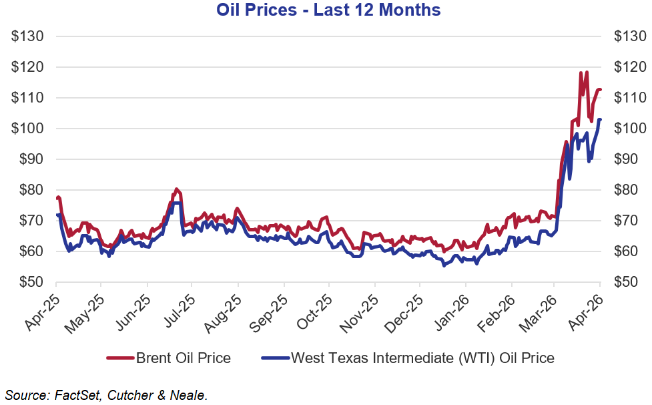
European markets were particularly sensitive to the energy shock, reflecting the region’s reliance on imported energy. The disruption to global oil and liquefied natural gas supply drove a sharp increase in energy prices, with oil trading in a wide range near recent highs and natural gas prices also rising significantly. This triggered a material repricing of inflation expectations and a shift in central bank outlooks. Markets moved from anticipating rate cuts to pricing in multiple potential rate increases, as policymakers responded to the risk of sustained inflation. Economic data reinforced these concerns, with business activity slowing, confidence measures deteriorating, and inflation rising to 2.5%. Growth expectations were revised lower across the region, and investor sentiment weakened, with capital flowing out of European equities. The combination of higher energy costs, weaker growth and tighter financial conditions contributed to one of the region’s largest monthly declines in recent years.
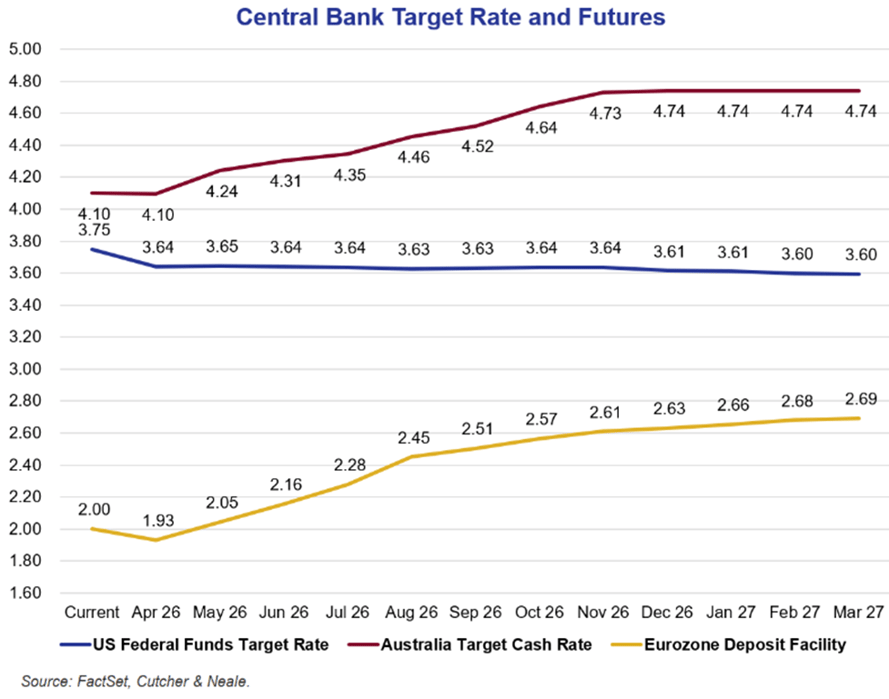
In Australia, the ASX 200 fell 7.15% in March, as global developments and domestic policy tightening weighed on sentiment. The Reserve Bank of Australia increased the cash rate by 0.25% to 4.10%, highlighting ongoing inflation risks and capacity constraints in the economy. The global oil shock added further pressure, with higher fuel costs impacting both households and businesses. Bond yields rose across the curve, with the 10-Year Government Bond yield increasing to 4.98%, while the Australian Dollar declined 3.89% to US$0.6849. Economic data was mixed, with employment growth exceeding expectations but showing some softening in composition, while inflation remained elevated in key domestic categories such as housing and services. Equity market performance was broadly weak, with declines across most sectors and increased volatility throughout the month.
Overall, March marked a clear shift in market conditions, with geopolitics re-emerging as a dominant driver of asset prices. The sharp rise in energy prices has complicated the inflation outlook and reduced the likelihood of near-term policy easing across major economies. While markets have shown some resilience, the balance of risks has shifted, with investors now focused on the duration of the conflict, the persistence of inflation, and the potential implications for global growth as the year progresses.

Key Stocks



Ryan joined Cutcher & Neale as a Portfolio Manager in January 2023, bringing nearly 20 years of financial markets experience to the firm. Specialising in fundamental equity analysis and multi-asset strategies, Ryan holds the Chartered Financial Analyst (CFA) designation. He is responsible for the risk and return outcomes of the firm’s Managed Discretionary Account (MDA) portfolios on the Mason Stevens platform.
.png?width=352&name=Investment%20SnapShot%20Header%20-%202026%20(3).png)