
|
|
Quick TakeMarkets retreated in September: Most sharemarkets fell. In the United States, the S&P 500 slipped 0.35% and the Russell 2000 fell 4.92%, while the Nasdaq gained 1.93%. In Europe, the STOXX Europe 600 fell 2.40%, and Australia’s ASX 200 declined 2.42%. Surging bond yields, higher oil prices and interest rate increases from major central banks weighed on markets. The United States held up at the index level: Enthusiasm for artificial intelligence lifted the Nasdaq 1.93%, masking broader weakness beneath the surface. The Federal Reserve raised rates for the first time in more than three years, while long-term Treasury yields reached their highest levels since 2002. Economic data ran hot, with strong jobs growth and business activity, although price pressures also intensified. Europe and Australia ended their winning runs: European markets fell as bond yields hit multi-year highs and the European Central Bank raised rates, although the economy proved resilient. In Australia, the Reserve Bank raised the cash rate 0.25% to 4.60%, its fourth increase this year, as headline inflation climbed to 4%. The key question from here is whether earnings strength can offset higher borrowing costs, and whether persistent inflation pushes central banks to raise rates further. |
|
Snapshot
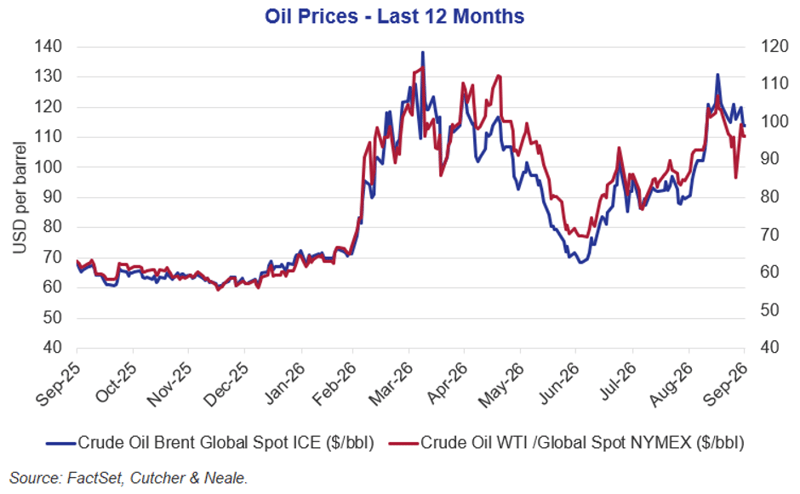
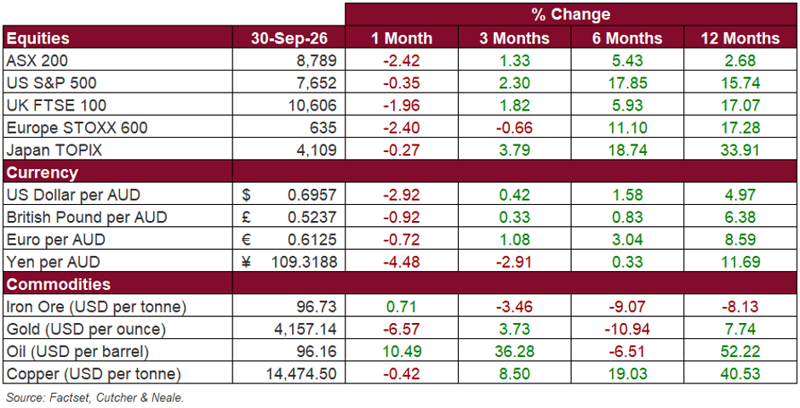 Global equity markets were mostly lower in September, ending a run of monthly gains in Europe and Australia. In the United States, the S&P 500 slipped 0.35% and the Russell 2000 fell 4.92%, while the Nasdaq gained 1.93%. In Europe, the STOXX Europe 600 fell 2.40%, the FTSE 100 declined 1.96%, the DAX lost 3.27% and the CAC fell 4.16%. In Australia, the ASX 200 fell 2.42%. Every region was shaped by a sharp rise in government bond yields to their highest levels in many years, higher oil prices as the conflict with Iran dragged on, and central banks raising interest rates in response to persistent inflation.
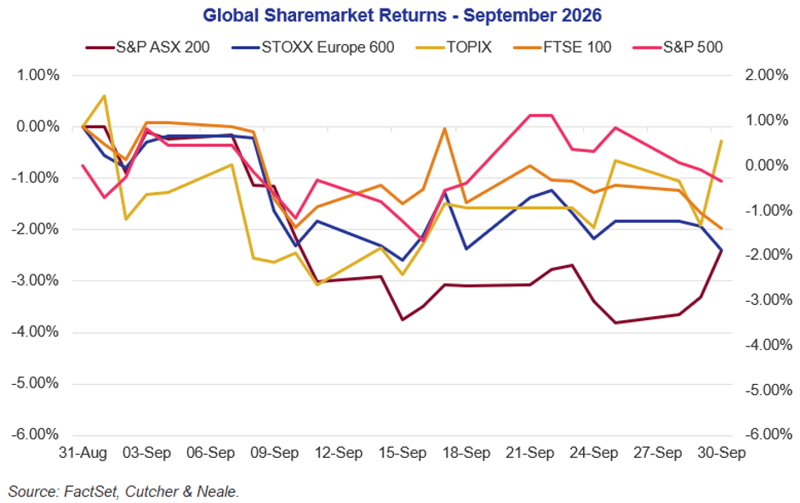
In the United States, the S&P 500 fell 0.35%, a modest decline that masked much broader weakness. Artificial intelligence lifted the Nasdaq 1.93%, as enthusiasm for new models outweighed calls from some industry leaders to slow the pace of development, while the Russell 2000 fell 4.92%. The main pressure came from bond markets, with 10-year and 30-year Treasury yields reaching their highest levels since 2002. The Federal Reserve raised interest rates by 0.25% for the first time in more than three years, and hawkish commentary from Chair Warsh suggested further tightening is possible. Economic data ran hot, with strong jobs growth and business activity at its fastest pace since 2021, although price pressures also intensified.
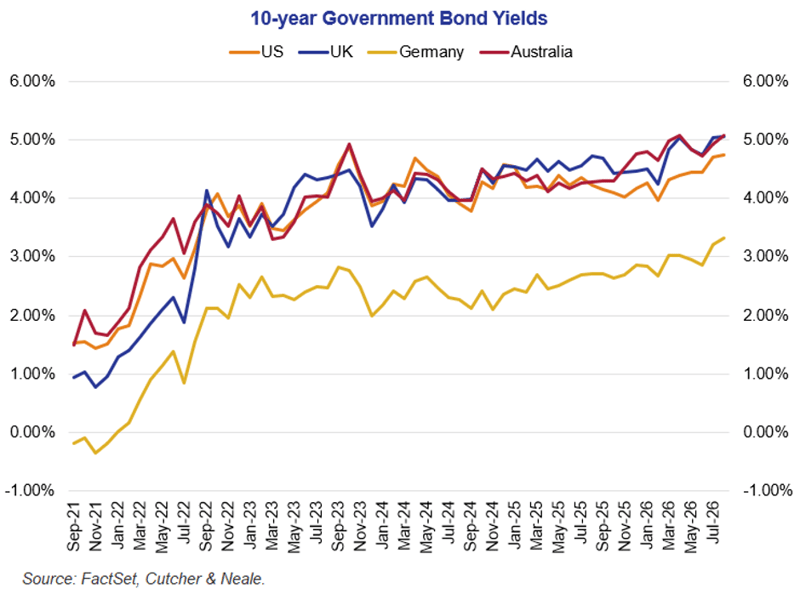
European markets recorded their first monthly loss in six months, with the STOXX Europe 600 falling 2.40%. Higher energy prices and rising bond yields weighed on sentiment, with German 10-year yields reaching their highest level since 2009 and UK 10-year yields their highest since 2007. Fiscal and political concerns added to the pressure, as the gap between French and German borrowing costs widened to its largest since 2008 ahead of next year’s French presidential election, and investors focused on reduced fiscal room ahead of the UK Budget in October. The European Central Bank raised interest rates by 0.25%, while the Bank of England held rates but warned it may need to raise them if energy prices stay high. Encouragingly, the economy proved resilient, with Eurozone growth revised up to 0.6% for the June quarter and business activity expanding at its fastest pace in over three years. Oil prices eased late in the month as supply from the Middle East began to recover.
 In Australia, the ASX 200 fell 2.42%, ending a five-month winning run, as the global bond sell-off pushed local 3-year and 10-year yields to 15-year highs. The Reserve Bank raised the cash rate 0.25% to 4.60%, its fourth increase this year, citing inflation that remains too high, higher energy costs and weak productivity, and said it remains prepared to tighten further. Economic growth in the June quarter was stronger than expected, driven by household spending. Employment rose in August, although all of the gain came from part-time work and unemployment rose to a five-year high. Headline inflation climbed to 4% over the year to August from 3.5%, driven by fuel and electricity costs, though this was slightly below expectations, while trimmed mean inflation held at 3.6%.
Overall, September marked a pause after several months of gains, as rising bond yields and higher interest rates weighed on most markets. Conditions remain challenging, although economic growth and the corporate earnings outlook continue to hold up well. The key question from here is whether that earnings strength can offset the pressure from higher borrowing costs, and whether persistent energy-driven inflation pushes central banks to raise rates further.

Key Stocks



Ryan joined Cutcher & Neale as a Portfolio Manager in January 2023, bringing nearly 20 years of financial markets experience to the firm. Specialising in fundamental equity analysis and multi-asset strategies, Ryan holds the Chartered Financial Analyst (CFA) designation. He is responsible for the risk and return outcomes of the firm’s Managed Discretionary Account (MDA) portfolios on the Mason Stevens platform.

.png?width=352&name=Investment%20SnapShot%20Header%20-%202026%20(3).png)